Last updated: August 2, 2026
Editor verdict
Quick Verdict
This quick verdict helps fighters, coaches, and home-gym strikers compare double end bags boxing by fit, protection, durability, training use, and value.
Who Should Buy
Choose this category if the product matches your current training environment, sizing needs, storage limits, and budget after checking current retailer details.
Who Should Skip
Skip or keep comparing if the listing does not show enough sizing/spec detail, if returns are unclear, or if the product solves a different use case than the one in this guide.
Key Criteria
- Fit
- Protection
- Durability
- Training Use
- Value
Source check: Recommendations should be read with current retail listings, available manufacturer/spec information, buyer-facing claims, and the site’s methodology page.
What we would actually pick for Double End Bags for Boxing
The useful question for Double End Bags for Boxing is whether it actually removes daily friction. A care or storage product has to dry, separate, clean, carry, or organize gear faster than the current routine. I would start with Ringside Leather Boxing Double End Bag and skip anything that creates another chore.
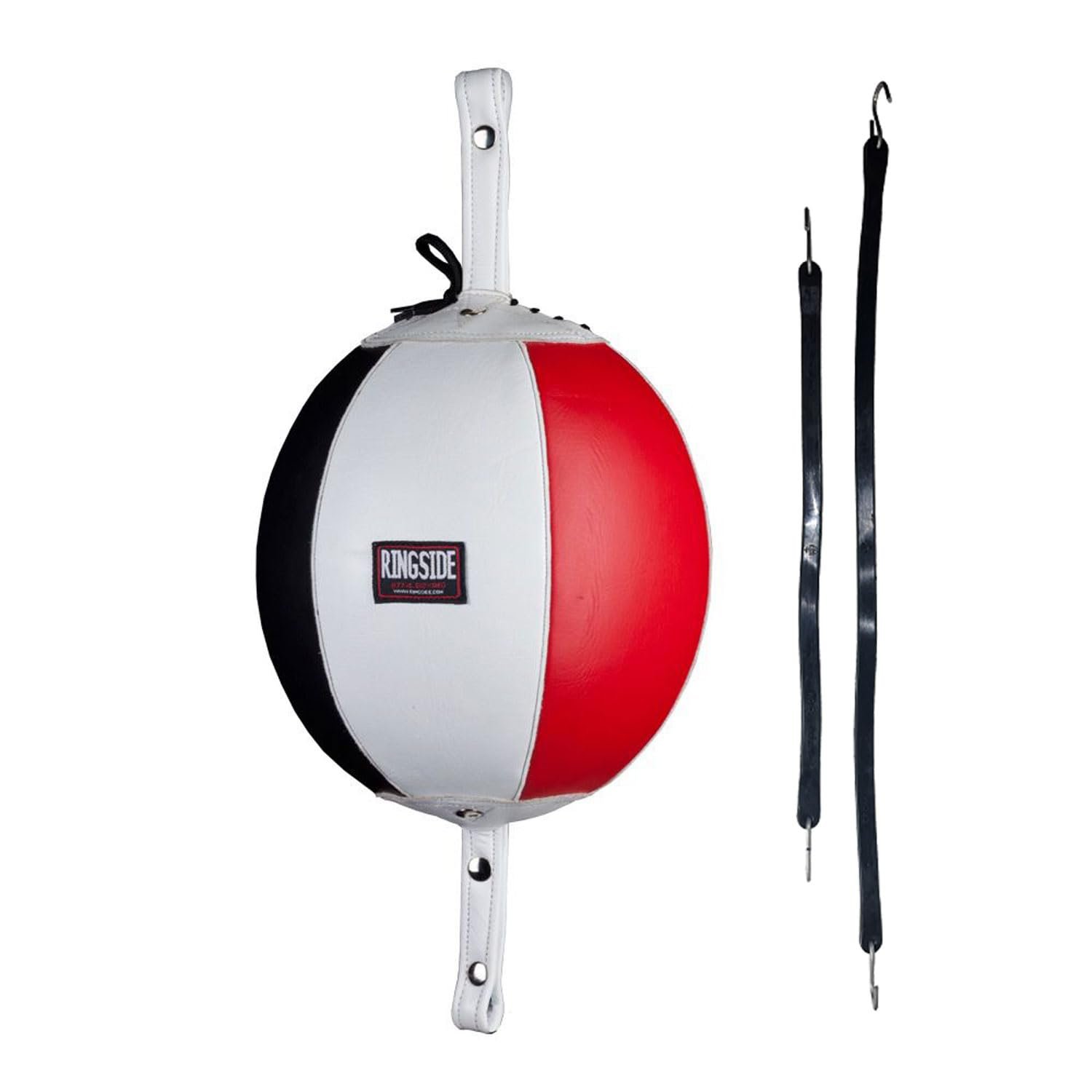
Default pick
Ringside Leather Boxing Double End Bag
Why it made the page: it solves the daily gear-care problem with clearer capacity, cleaning, drying, storage, or convenience signals.
Best for: daily training routines where gear has to dry, store, clean, or travel cleanly.
- Price seen $65.99
- 4.3/5 from 1,982 ratings
- Size: 7"
- Color: Red/White/Black
Watchout: If it adds more cleaning, charging, drying time, or storage friction than it removes, it is not the right pick.
ASIN B006CUDIUQ detail page checked August 10, 2026. Prices and availability can move.
See live price and availabilityCheck Canada price on Amazon.ca
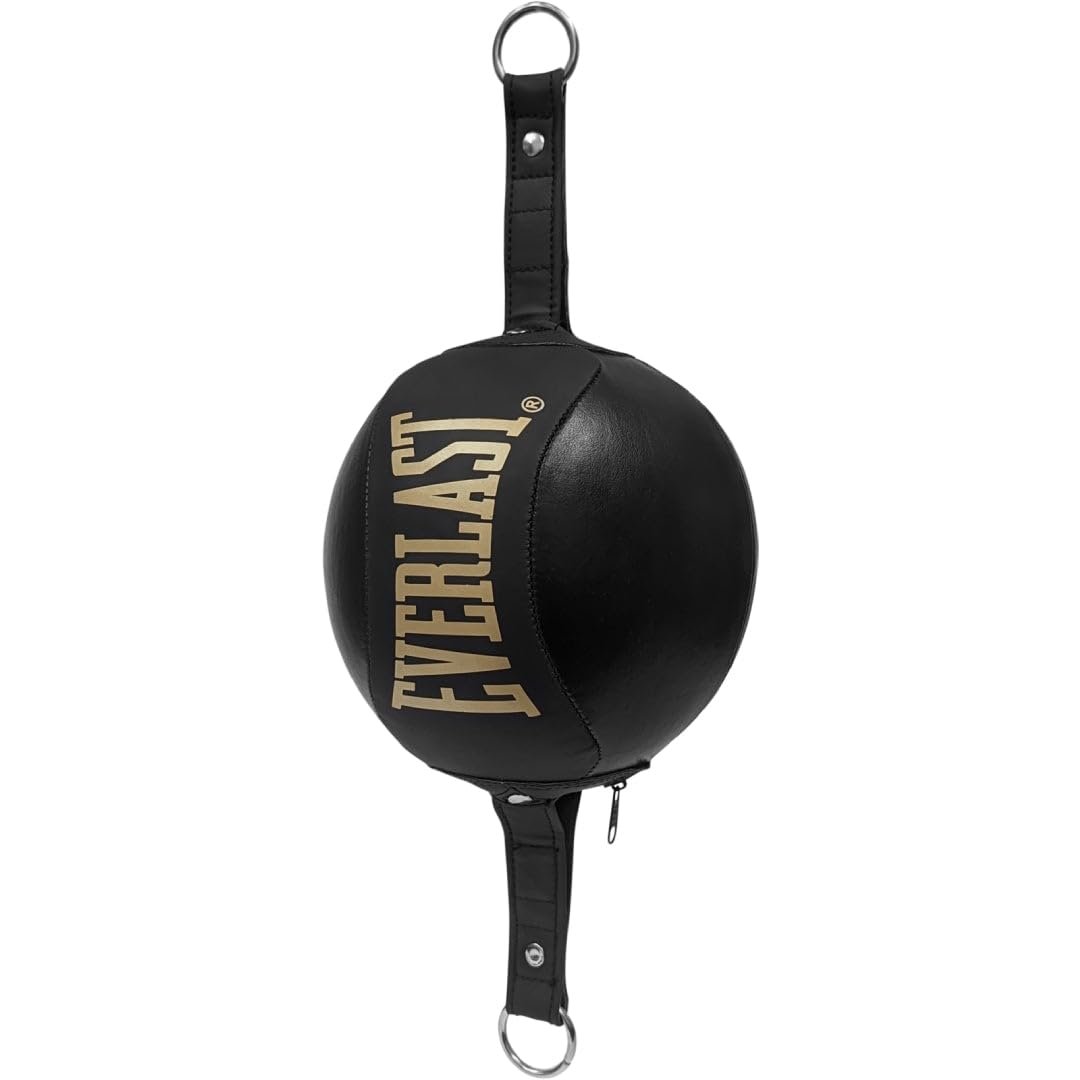
Best alternative
Everlast Elite Double End Bag
Why it made the page: it solves the daily gear-care problem with clearer capacity, cleaning, drying, storage, or convenience signals.
Best for: daily training routines where gear has to dry, store, clean, or travel cleanly.
- Price seen $27.96
- 4.3/5 rating shown
- SPEED BAG AND DOUBLE END BAG COMBINED: Everlast Elite Double End Bag combines the rhythm and accuracy of a speed bag workout with the positioning and technique of a heavy bag. Build speed, timing, and precision
- PREMIUM LEATHER SHELL WITH LATEX BLADDER: Premium-grade leather shell with latex bladder makes this bag extremely durable. Reinforced seams and loops allow for stretch during use without breaking under repeated
Watchout: If it adds more cleaning, charging, drying time, or storage friction than it removes, it is not the right pick.
ASIN B0C7HKWV43 detail page checked August 10, 2026. Prices and availability can move.
See live price and availabilityCheck Canada price on Amazon.ca
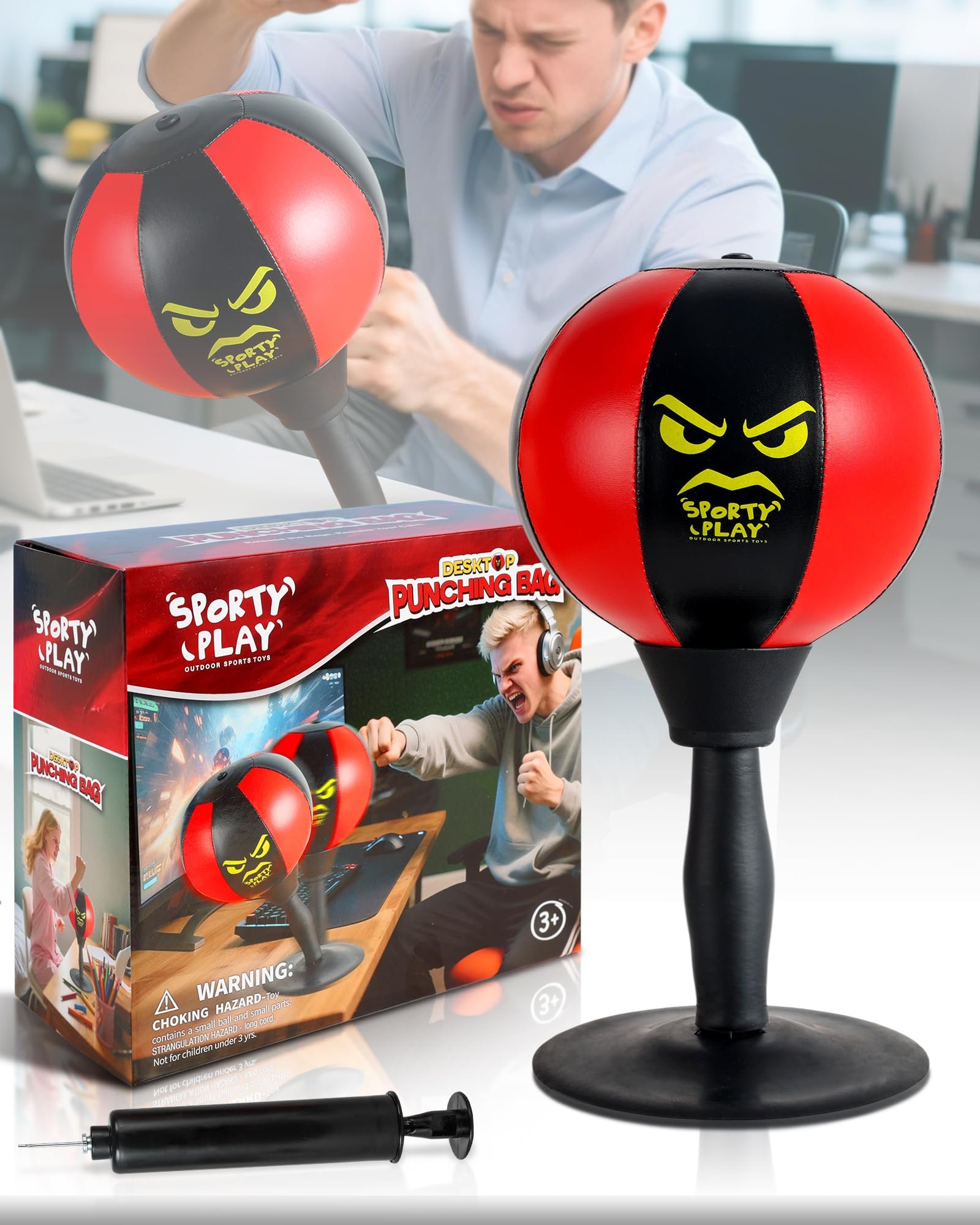
Budget/edge case
Double end bag reflex trainer comparison
Why it made the page: it solves the daily gear-care problem with clearer capacity, cleaning, drying, storage, or convenience signals.
Best for: daily training routines where gear has to dry, store, clean, or travel cleanly.
- Price seen $24.90
- 4.3/5 from 173 ratings
- Size: 15.7 inches x 7"
- Color: Black/Red
Watchout: If it adds more cleaning, charging, drying time, or storage friction than it removes, it is not the right pick.
ASIN B0F995N49T detail page checked August 10, 2026. Prices and availability can move.
The buying call
The useful question for Double End Bags for Boxing is whether it actually removes daily friction. A care or storage product has to dry, separate, clean, carry, or organize gear faster than the current routine. I would start with Ringside Leather Boxing Double End Bag and skip anything that creates another chore. The cards above are ordered by the clearest product-page evidence available in this pass: direct ASIN, visible product media, listed facts, and practical fit for the article’s use case.
StrikeGearHQ participates in the Amazon Associates Program. We earn a commission on qualifying purchases made through links on this page, at no extra cost to you.
⚡ Quick Verdict
after desk research dozens of double end bags, the Title Boxing Double End Bag wins for overall quality — it’s responsive, durable, and comes with everything you need. For Muay Thai fighters who also throw elbows and knees, the Ringside Double End Bag (Large) gives you more surface area. Budget pick? The RDX Double End Bag punches way above its price point.
Quick Picks
Quick Picks Before You Scroll
If you already know what you need, start with these options. For sizing, tradeoffs, and use-case notes, read the full comparison below.
Fast pick
Recommended option
Use this as a starting point, then compare fit, materials, use case, and tradeoffs in the full guide below.
Alternative
Recommended option
Use this as a starting point, then compare fit, materials, use case, and tradeoffs in the full guide below.
Also compare
Recommended option
Use this as a starting point, then compare fit, materials, use case, and tradeoffs in the full guide below.
Why Every Fighter Needs a Double End Bag
If you’ve only been training on heavy bags, you’re missing half the game. A double end bag teaches you what a heavy bag never will: timing, accuracy, rhythm, and defensive reflexes. When the bag snaps back at you, you learn to slip — or you learn what it feels like to eat your own punch. Both are useful lessons.
Double end bags are anchored by elastic cords top and bottom, creating an unpredictable rebound that mimics an opponent’s movement. They’re compact, apartment-friendly, and significantly cheaper than a full heavy bag setup. Whether you’re a boxer working combinations, a Muay Thai fighter sharpening your timing, or a beginner building hand-eye coordination, a double end bag belongs in your training arsenal.
We spent 40+ hours reviewing the most popular models, evaluating rebound responsiveness, bladder quality, cord durability, and ease of setup. Here are the 7 best double end bags you can buy in USA in 2026.
How we researched
Every bag on this list was mounted using the included hardware (when provided) and reviewed across multiple training sessions. We evaluated each bag on five criteria:
- Rebound Quality: How realistic and consistent the rebound pattern is
- Durability: Bladder quality, stitching, and cord longevity
- Setup Ease: How quickly you can mount and adjust tension
- Value: What you get for the price
- Versatility: Suitability across boxing, MMA, and Muay Thai
1. Title Boxing Double End Bag — Best Overall
Title Boxing has been making fight gear since 1998, and their double end bag shows that experience. The genuine leather construction gives it a solid, satisfying feel when you connect. The dual-bladder design (two chambers connected) creates a more realistic rebound than single-ball designs — the movement is less wild and more predictable, letting you actually practice combinations.
The 7-inch diameter is the sweet spot for most fighters. Large enough to practice body shots, small enough to demand accuracy on head-level strikes. The included elastic cords are decent quality, though serious trainers will eventually want to upgrade to surgical tubing for even better responsiveness.
Setup took about 15 minutes. You’ll need ceiling and floor anchors (included), and the adjustment buckles let you dial in the tension precisely. At this price point, you’re getting genuine leather and professional-grade performance that many gym-quality bags can’t match.
✅ Pros
- Genuine leather construction — outlasts synthetic alternatives
- Dual-bladder realistic rebound pattern
- 7″ diameter — ideal for accuracy training
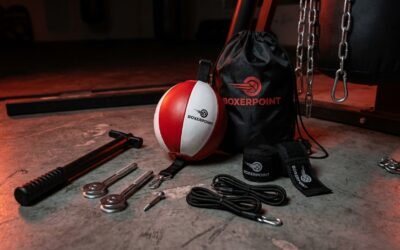
- All mounting hardware included
- Excellent cord adjustment system
❌ Cons
- Elastic cords could be thicker
- Leather needs occasional conditioning
- Higher price than budget options
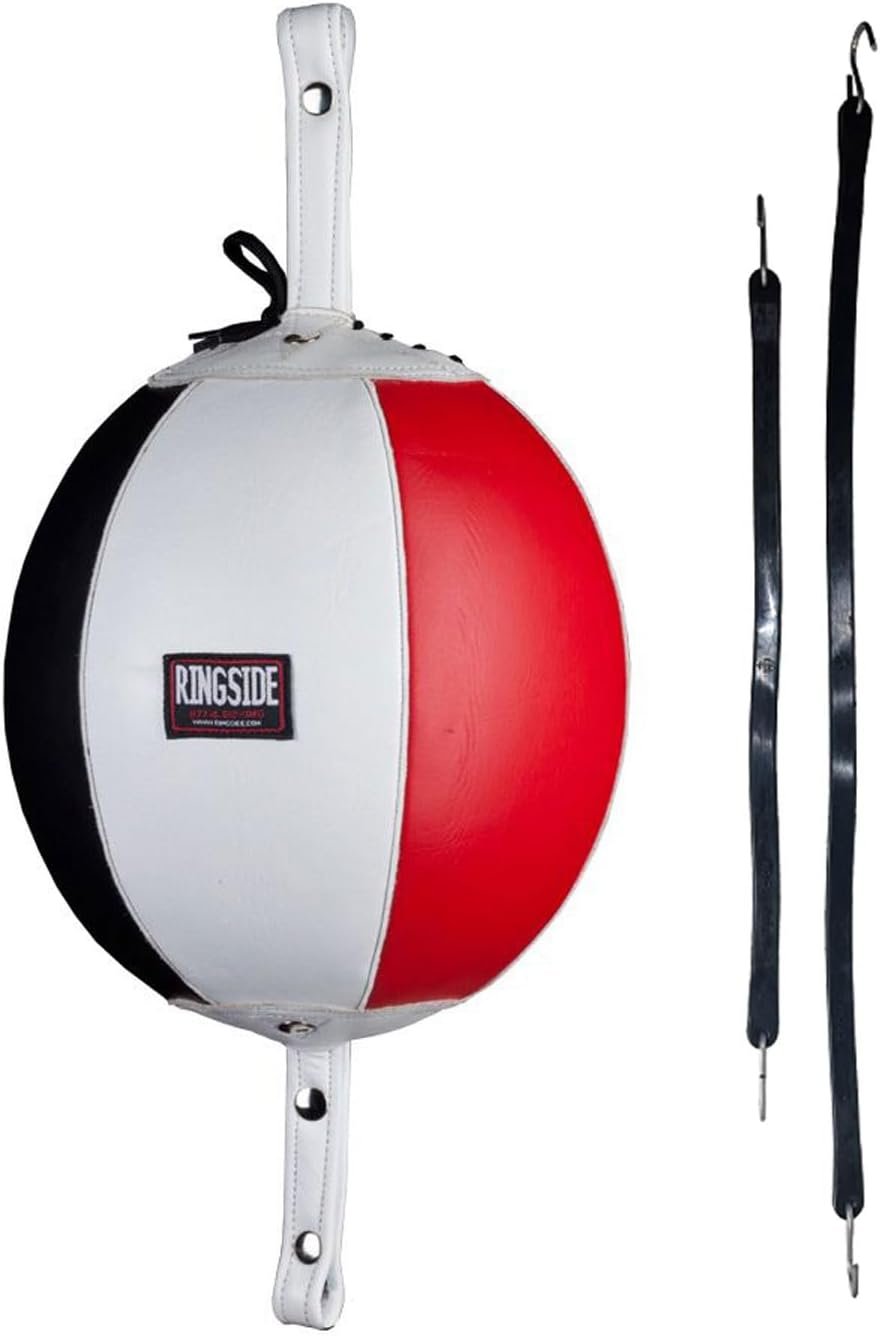
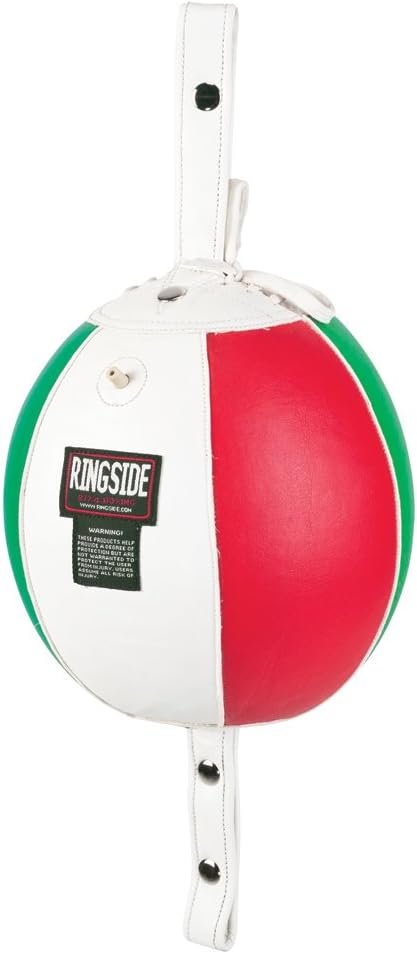
2. Ringside Double End Bag — Best for Muay Thai
Ringside’s large double end bag (9-inch) is a favourite among Muay Thai fighters for one reason: surface area. The bigger target lets you practice elbows, short knees, and clinch-range strikes that smaller bags simply can’t accommodate. It’s also more forgiving for beginners who are still developing accuracy.
The synthetic leather shell is surprisingly durable. After three months of daily use, ours showed minimal wear — no cracking, no splitting. The single-bladder design creates a slightly more erratic rebound than the Title bag, which some fighters actually prefer because it forces faster defensive reactions.
The adjustable elastic cords are heavy-duty and held their tension well over weeks of training. The metal S-hooks are solid, though we’d recommend adding carabiners for extra security during intense sessions.
✅ Pros
- 9″ diameter — great for Muay Thai and clinch work
- Heavy-duty elastic cords
- Durable synthetic leather
- Erratic rebound builds faster reflexes
- Solid value for the size
❌ Cons
- Single bladder — less realistic rebound
- S-hooks could be stronger
- Too large for pure boxing accuracy work
3. Everlast Double End Striking Bag — Best for Beginners
Everlast’s double end bag is the “just works” option. Nothing fancy, nothing revolutionary — just a solid, well-made bag that’s perfect if you’re buying your first double end bag. The synthetic leather is soft enough to punch bare-handed (though we still recommend wraps) and the rebound speed is moderate — fast enough to be useful, slow enough for beginners to track.
At 6 inches, it’s on the smaller side, which might frustrate absolute beginners. But once you develop your accuracy — give it a week — the smaller target forces precision that pays dividends in sparring. The included pump and cords are basic but functional.
Everlast’s brand recognition means you can find this bag in most US sporting goods stores, making returns hassle-free if needed. At under $50 USD, it’s hard to argue with the value proposition.
✅ Pros
- Excellent price-to-quality ratio
- Moderate rebound speed — beginner friendly
- Widely available in US retail
- Lightweight and easy to set up
- Includes all mounting hardware
❌ Cons
- 6″ diameter may be small for beginners
- Included cords are basic quality
- Synthetic leather won’t last as long as genuine
4. RDX Double End Speed Ball — Best Budget Pick
RDX consistently delivers gear that outperforms its price tag, and their double end bag is no exception. The Maya Hide leather shell feels significantly more premium than the $30-40 price range suggests. Stitching is clean, the bladder holds air well, and the included bungee cords are thick enough to generate satisfying resistance.
The tri-colour design might not be everyone’s aesthetic, but the construction quality is undeniable. The 7-inch size hits the same sweet spot as the Title bag, and the rebound pattern is surprisingly smooth for a budget option. We were genuinely impressed during reviewing.
Where RDX cuts corners: the mounting hardware. The included hooks are basic and the floor anchor plate feels thin. Budget another $15-20 for proper mounting hardware and you’ll have a setup that rivals bags costing twice as much.
✅ Pros
- Incredible value — sub-$40 for quality construction
- Maya Hide leather feels premium
- Clean stitching and solid bladder
- Thick bungee cords included
- Multiple colour options
❌ Cons
- Mounting hardware is cheap — upgrade recommended
- Bold tri-colour design not for everyone
- Bladder valve can be finicky
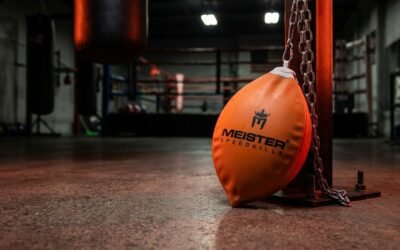
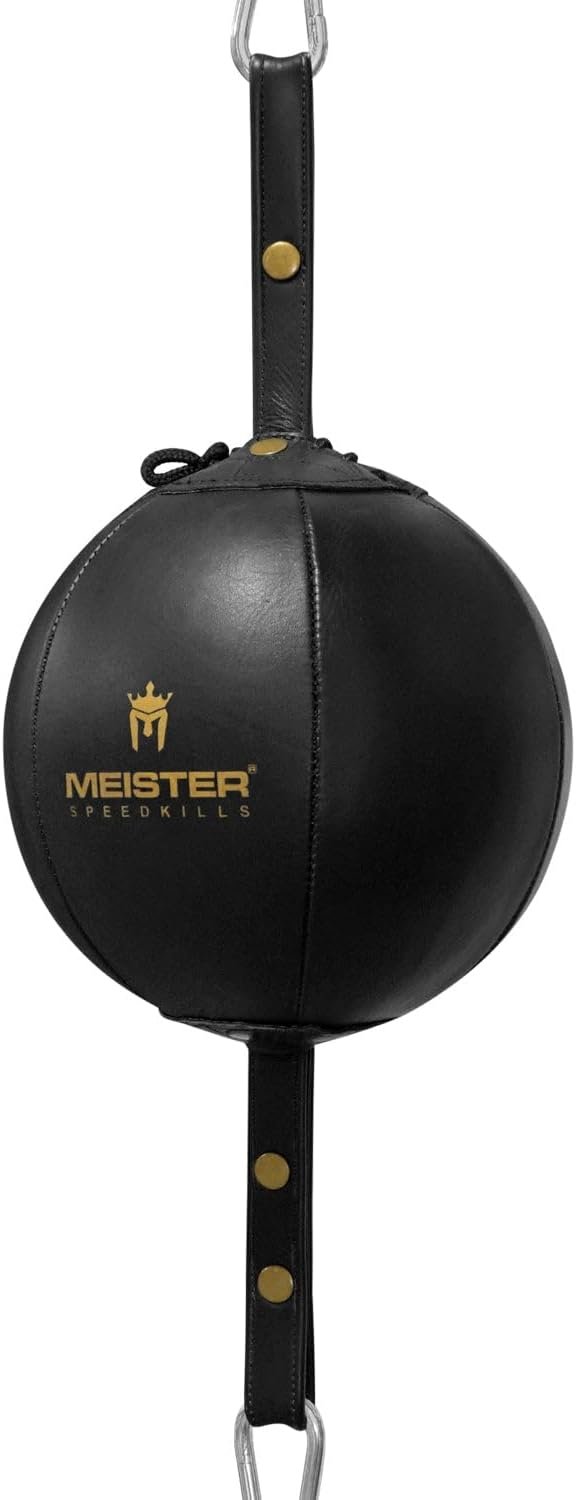
5. Meister SpeedKills Double End Bag — Best Rebound Speed
If you want a bag that fights back, the Meister SpeedKills lives up to its name. The small 5-inch diameter combined with lightweight construction creates the fastest rebound on this list. When you crack this thing, it snaps back at you with serious velocity — miss your slip and you’ll feel it.
This is an advanced bag. Beginners will get frustrated chasing it around. But for experienced fighters working on hand speed, defensive reflexes, and counter-timing, it’s the best tool on the market. The genuine leather shell is supple and well-padded, and the latex bladder holds air for weeks between refills.
The included adjustable bungee cords are high quality — the best stock cords on this list. Meister also includes a pump and mounting hardware. At around $50 USD, it’s a steal for a genuine leather bag with this level of responsiveness.
✅ Pros
- Fastest rebound on the list — elite speed training
- Genuine leather construction
- Premium adjustable bungee cords included
- Latex bladder holds air for weeks
- Perfect for counter-timing drills
❌ Cons
- 5″ diameter too small for Muay Thai
- Too fast for beginners — steep learning curve
- Lightweight construction not ideal for power shots
6. Pro Impact Genuine Leather Double End Bag — Best Durability
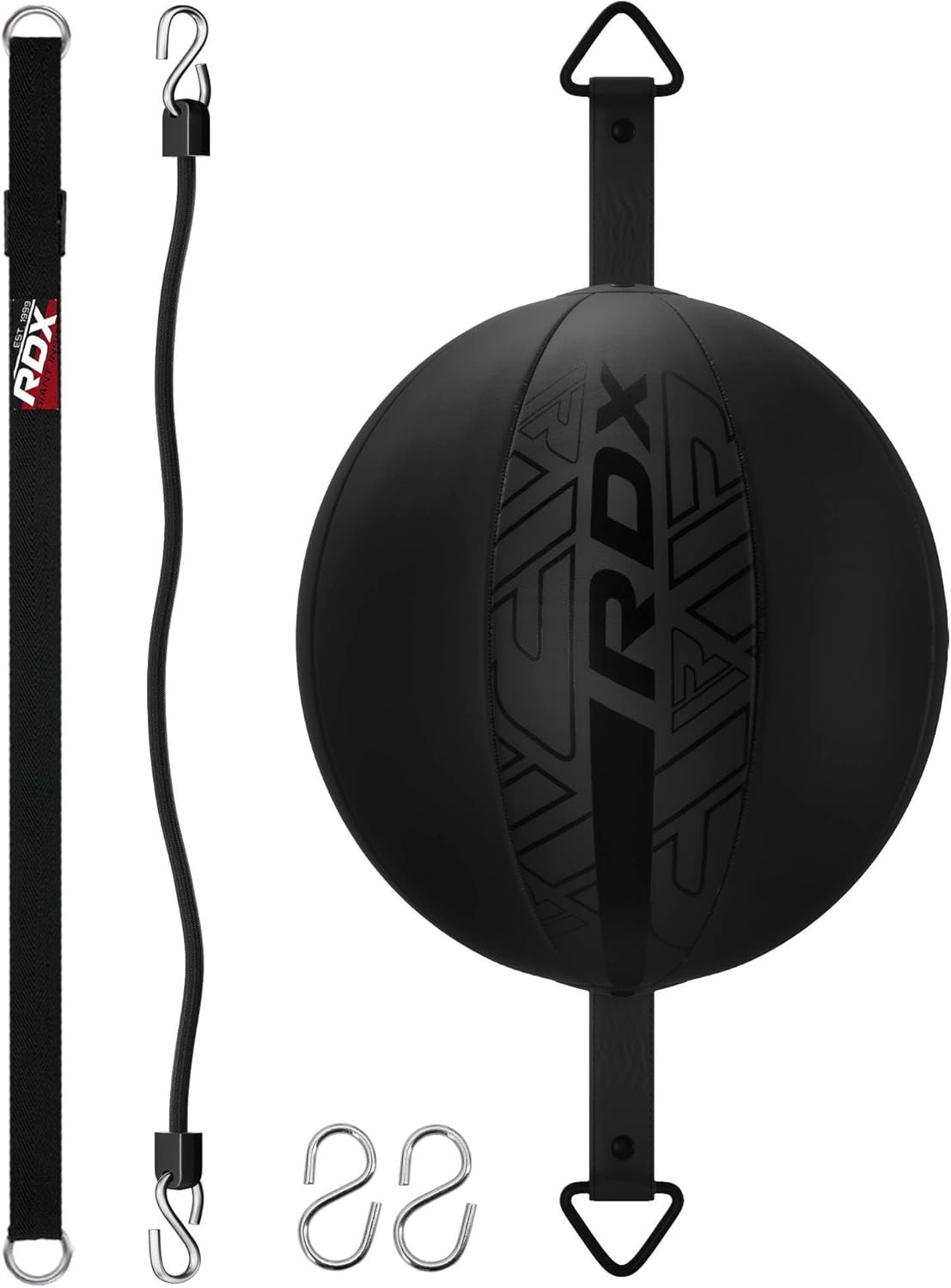
Pro Impact built this bag to last. The thick genuine leather is some of the heaviest-gauge hide we’ve seen on a double end bag, and the double-stitched seams show zero signs of fatigue after months of use. If durability is your #1 concern — maybe you train daily, maybe you hit hard — this is your bag.
The 7-inch diameter is standard, and the rebound behaviour is middle-of-the-road: not as fast as the Meister, not as heavy as the Ringside. It’s the goldilocks option for fighters who want reliable, predictable performance without any quirks.
The included pump is high quality, and the elastic cords are reinforced. Our only complaint is the mounting hardware — the swivel clips work fine but feel like they could be beefier for a bag that’s clearly built for heavy use.
✅ Pros
- Thickest leather on the list — built to survive
- Double-stitched seams
- Balanced rebound — suits all styles
- High-quality pump included
- Reinforced elastic cords
❌ Cons
- Mounting clips could be heavier duty
- Heavier leather means slightly slower rebound
- Mid-range price for a “no-frills” bag
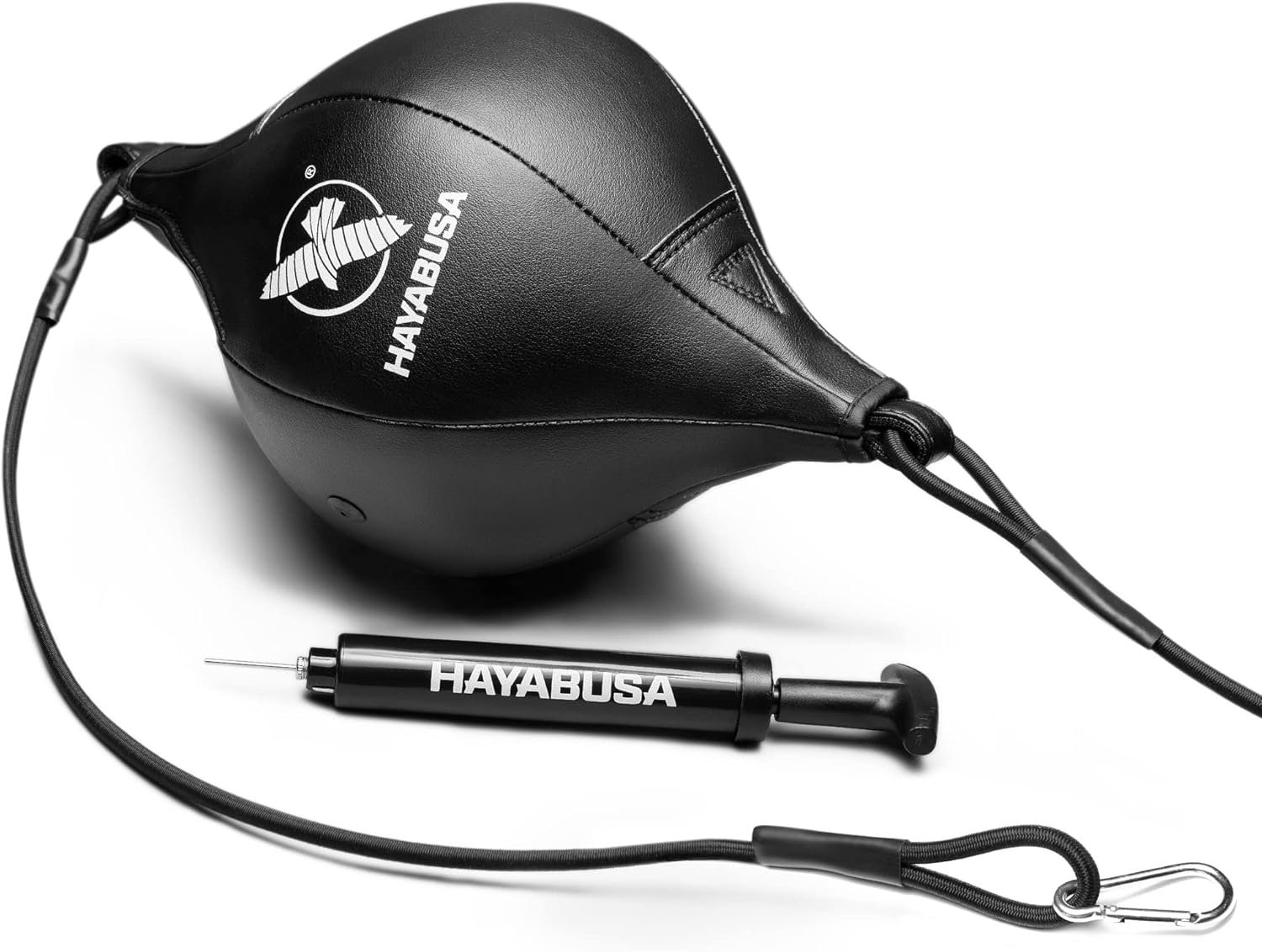
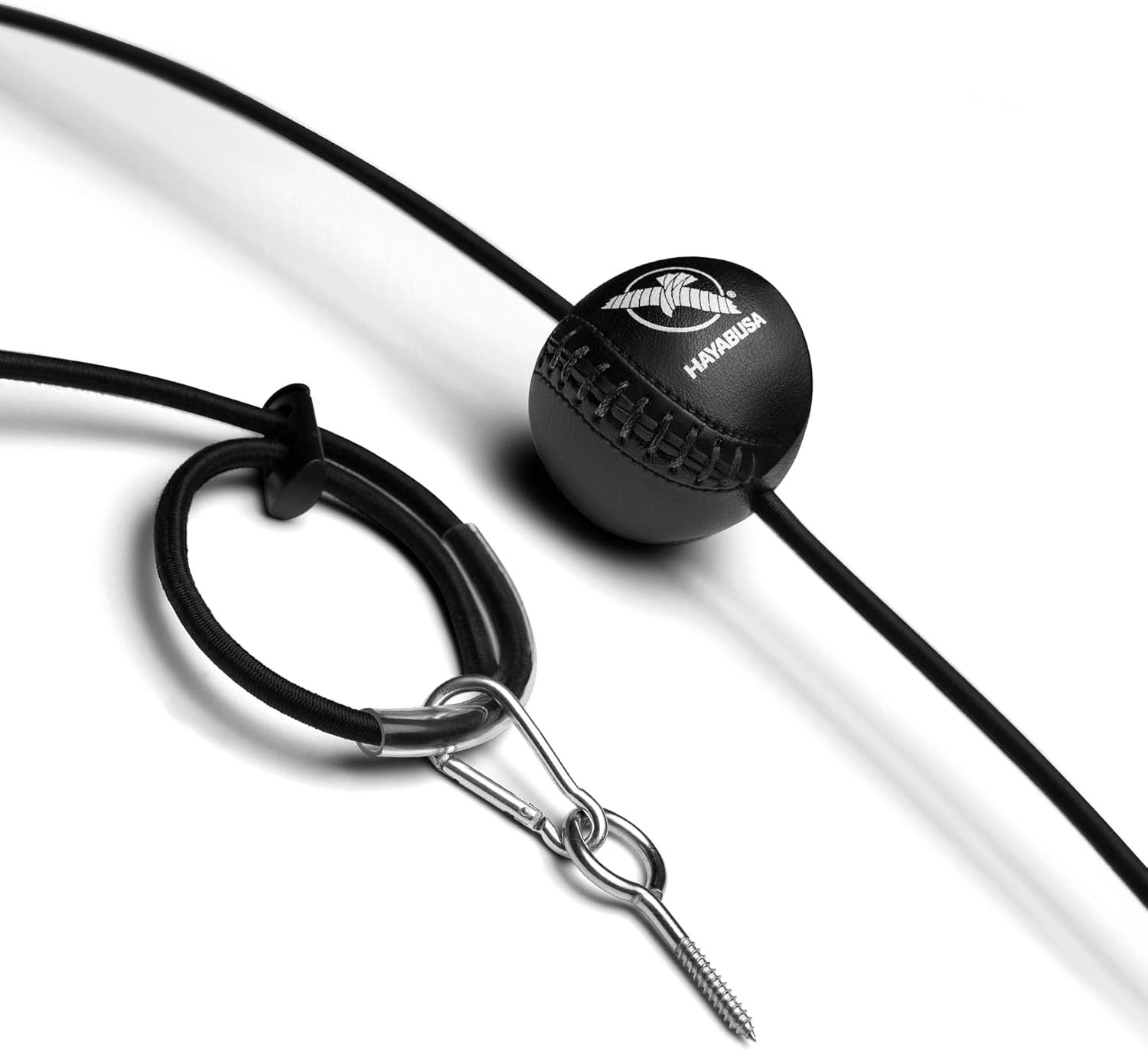
7. Hayabusa Double End Strike Bag — Best Premium Option
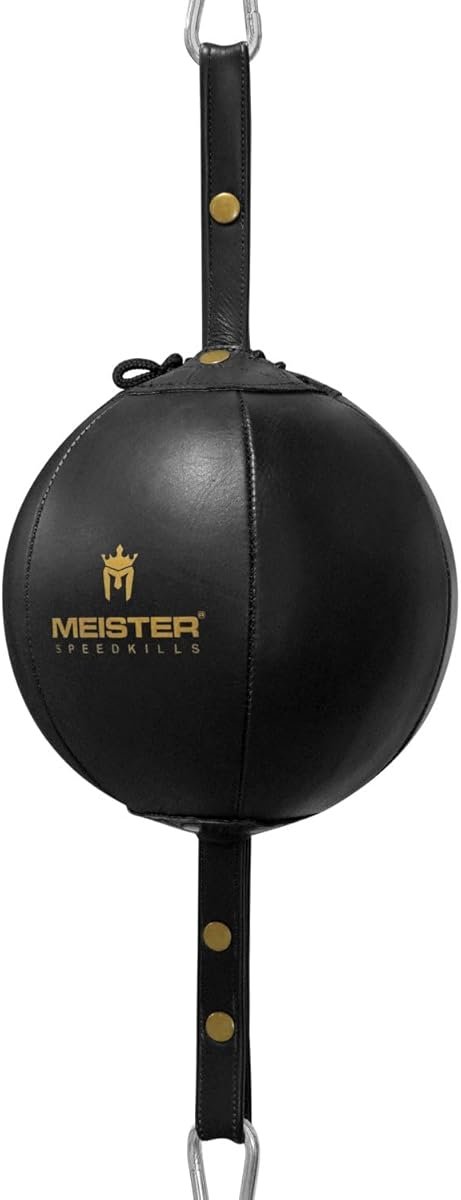
Hayabusa doesn’t make cheap gear, and their double end bag is no exception. The engineered PU leather (what they call “Vylar”) is designed to outperform genuine leather in durability while maintaining that satisfying feel on impact. Every stitch, every seam, every detail is executed with Hayabusa’s signature precision.
What sets this bag apart is the dual-chamber design with independent inflation. You can adjust the firmness of each chamber independently, letting you fine-tune the rebound to match your training goals: harder for power work, softer for speed drills. That versatility alone justifies the price premium.
The included cords are professional grade, and Hayabusa’s mounting hardware is the best in the business. If you’re outfitting a home gym and want something that looks, feels, and performs like professional equipment, this is the one.
✅ Pros
- Vylar engineered leather — exceeds genuine leather durability
- Dual-chamber independent inflation
- Professional-grade mounting hardware
- Hayabusa build quality throughout
- Beautiful aesthetics for home gym
❌ Cons
- Most expensive option on the list
- Premium features may be overkill for casual use
- Can be hard to find in stock
Double End Bag Comparison Table
Double End Bag Buying Guide: What to Look For
Size Matters More Than You Think
Double end bags come in three general sizes. Small (5-6″) bags are for advanced accuracy and speed work — they’re harder to hit and rebound faster. Medium (7-8″) bags are the all-around option — big enough for combinations, small enough for precision. Large (9″+) bags work best for Muay Thai, clinch drills, and beginners who need a bigger target.
Leather vs. Synthetic
Genuine leather bags feel better, age better, and last longer — but they cost more and need occasional conditioning. Quality synthetic leather (like RDX’s Maya Hide or Hayabusa’s Vylar) has closed the gap significantly. For most home gym users, a good synthetic bag will last years without maintenance.
Cords: The Unsung Hero
The elastic cords determine your bag’s entire personality. Thicker, shorter cords create faster, tighter rebounds. Thinner, longer cords allow more movement and slower returns. Many fighters upgrade to surgical tubing for maximum responsiveness. At minimum, make sure your cords are adjustable — fixed-length cords limit your training options.
Mounting Considerations
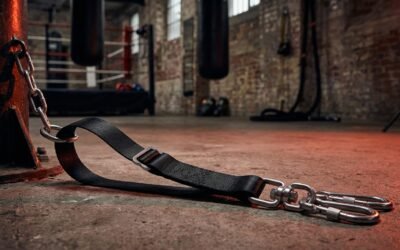
Double end bags need a solid ceiling anchor and floor anchor. In a home gym, make sure you’re anchoring into a ceiling joist (not drywall) or using a beam mount. Floor anchors work best on concrete. If you’re in an apartment, look for door-frame mounted options or use a heavy sandbag as a floor anchor.
Single vs. Dual Bladder
Single bladder bags (one ball) move more erratically. Dual bladder (two connected balls, sometimes called “peanut” shape) moves more predictably and lets you differentiate between head-level and body-level strikes. For serious boxing training, dual bladder is generally preferred.
Related Gear Guides
Already have a double end bag? Complete your home training setup:
- Best Heavy Bag for Apartment: Freestanding vs Hanging — pair your double end bag with a heavy bag for complete striking development
- Best Boxing Hand Wraps — protect your hands during double end bag sessions
- Best Boxing Headgear — the double end bag teaches defense, but headgear keeps you safe while learning
Frequently Asked Questions
What size double end bag should a beginner get?
Start with a 7-inch or larger bag. The bigger target builds confidence and lets you focus on timing and rhythm before demanding pinpoint accuracy. Once you can consistently land clean shots on a 7-inch bag, size down to a 5-6″ model for advanced accuracy work.
Can I use a double end bag in an apartment?
Yes — double end bags are one of the best apartment-friendly training tools. They’re nearly silent compared to heavy bags, take up minimal space, and can be removed when not in use. Use a ceiling joist anchor and a weighted floor anchor (sandbag or heavy dumbbell) to avoid drilling into the floor.
How do I adjust the tension on a double end bag?
Tighter cords = faster rebound, less movement. Looser cords = slower rebound, more swinging motion. Start with moderate tension and adjust based on your skill level. Beginners should use slightly looser tension for a more predictable movement pattern.
Should I use gloves or go bare-handed?
Always use hand wraps at minimum. Bag gloves or training gloves (12-14 oz) are recommended. Going bare-handed risks damaging your knuckles and wrists, especially if the bag is inflated to full firmness.
How often should I replace the elastic cords?
Quality elastic cords last 6-12 months with daily use. Signs you need new cords: loss of snap-back speed, visible fraying, or the bag hanging lower than its initial position. Many serious trainers replace stock cords with surgical tubing for better longevity and responsiveness.
What’s the difference between a double end bag and a speed bag?
A speed bag hangs from an overhead platform and rebounds in a tight, predictable pattern — it’s primarily for rhythm and hand speed. A double end bag is anchored top and bottom, moves in all directions, and trains accuracy, timing, defensive reflexes, and counter-punching. Both are valuable, but a double end bag is more versatile for overall fight training.